
By American Mural
7 min read

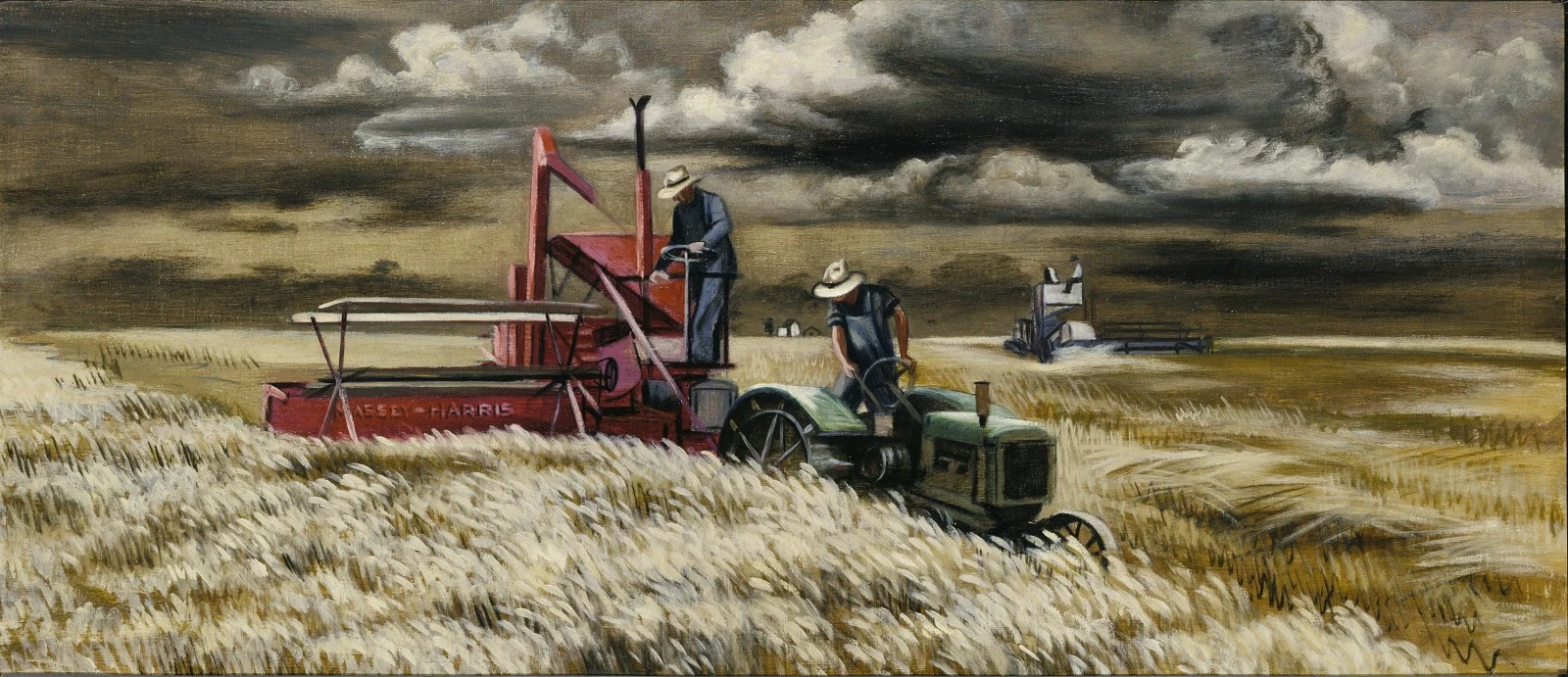
Between 1933 and 1943, the federal government paid artists to make work for post offices, schools, hospitals, libraries, housing projects, and other public places. It was an unusually direct idea: artists needed work, public buildings needed art, and people should not have to enter a museum or private collection to see it.
The results are still part of everyday life. Murals from the period remain in civic buildings across the country, often depicting the labor, landscape, and local history of the communities around them. They also leave us with practical questions that public artists still face. Who is the work for? Who decides what it shows? How should an artist respond to a specific place?
“WPA mural” has become a convenient name for nearly any federally sponsored artwork from the period, but the New Deal art effort was made up of four programs with different goals and rules. Only the Federal Art Project was part of the Works Progress Administration.
The General Services Administration’s history of the programs is useful because it keeps these distinctions clear. They were connected by a belief in public work, but they did not choose artists or fund projects in the same way.
Holger Cahill, who directed the Federal Art Project, argued for a broad culture of working artists instead of a narrow focus on a few celebrated names. In the Museum of Modern Art’s 1936 exhibition catalog New Horizons in American Art, he wrote, “Art is not a matter of rare, occasional masterpieces.” The catalog is available through MoMA’s archive.
Post offices are the best-known example. From 1934 through 1943, the federal government commissioned more than 1,600 murals and sculptures for federal buildings, most of them through the Treasury Section. Artists usually competed anonymously. Local residents and postmasters could comment on proposed subjects, although federal officials retained final approval. The National Postal Museum explains that process and why so many of the works came to be associated with the postal service.
The murals were not neutral records. They often presented an idealized version of local industry, agriculture, and history while leaving out the hardship that people were living through. That tension is part of their value as historical objects. They show what communities and federal officials wanted public life to look like, not simply what it was.
The important shift was where the work appeared. A painting in a post office, school, or courthouse meets people during an ordinary day. It becomes part of how a building feels and how a town represents itself. That is still one of public art’s particular strengths.
The Federal Art Project was a work-relief program. It paid eligible artists to practice their trade during a period when commissions and private sales had collapsed. Its activities included murals, paintings, sculpture, prints, photography, teaching, research, and exhibition programs. The Archives of American Art’s historical note gives a concise account of that scope.
Regular work mattered as much as the individual commission. Artists had time to develop their skills, learn from one another, and produce at a scale that the private market could not support. Some participants later became major figures in American art, but that familiar list of names can obscure the larger achievement. Thousands of working artists, many of whom never became famous, made useful and lasting work for the public.
The project also supported community art centers where people could take classes, see exhibitions, and work with artists. In Harlem, sculptor Augusta Savage helped establish and direct the Harlem Community Art Center. She taught and mentored younger artists, including Jacob Lawrence, Gwendolyn Knight, and Norman Lewis. The Smithsonian American Art Museum’s account of Savage’s work connects her studio, the WPA center, and the artists who came through both.
This part of the program is easy to overlook because it did not always leave a monumental object behind. Its legacy was also a room where someone could learn to draw, meet other artists, or see an exhibition for the first time. Public art policy was not limited to putting finished objects in buildings. It helped create places where art could be made.
The Federal Art Project’s Index of American Design documented furniture, tools, ceramics, textiles, toys, signs, and other examples of American material culture. Around 1,000 artists produced 18,257 watercolor renderings. The complete collection is now held by the National Gallery of Art.
The Index is a different kind of public-art legacy. It did not decorate a wall, but it preserved the forms, colors, and construction of objects that might otherwise have disappeared without a record. It treated vernacular craft as worthy of close observation and serious drawing.
The New Deal programs did not remove conflict from art. They gave it a more visible setting.
At San Francisco’s Coit Tower, 25 artists created a series of murals under the Public Works of Art Project in 1934. Their scenes of California life included labor, industry, libraries, farms, and city streets. Political imagery led to arguments and alterations before the tower opened to the public. The National Park Service documents both the artists and the six-month project and the changes made during the controversy.
That history is a reminder that public art has several audiences at once. The artist, client, building owner, neighbors, and future visitors may not agree about the subject or how it should be shown. A good process makes space for those interests without sanding every idea down to something forgettable.
Thomas Hart Benton’s America Today is often discussed alongside New Deal murals because of its scale, style, and focus on American labor. It was privately commissioned by the New School in 1930 and completed in early 1931, before the federal art programs began. It is now at the Metropolitan Museum of Art.
The distinction matters. America Today helped shape the visual language of the period, but it was not a WPA or New Deal commission. Keeping the funding and dates straight gives a clearer picture of what the federal programs actually changed.
The New Deal did not produce one style or a flawless model for public art. Some murals excluded important parts of local history. Some reflected the prejudices of their period. Some were changed, covered, or removed. Public ownership did not guarantee public agreement.
What the programs demonstrated is more durable: artists can do serious work in civic settings, and ordinary public spaces are worthy of care. The best projects still begin with that respect. They ask what belongs in a place, what the people using it should recognize, and how the work can be built well enough to remain part of the setting.
For muralists, the history is also practical. Design, access, surface preparation, scheduling, weather, and maintenance all determine whether an ambitious idea succeeds on a real wall. The New Deal murals that remain are not only images. They are the result of artists and institutions working through those conditions at an enormous scale.